Exploring the design principles, behavioral patterns, and implementation details of the Tool Executor in the Strands Agents architecture, with a comparison of performance between different concurrency and asynchronous techniques in this context.
前言
寫 Chatbot POC 的時候有個功能需求是提供”串並行 Call 小腦 Agent “的功能 因為使用的 Multi agent framework 是 Strands Agents,這樣就有很多方法可以實現了。
| 方法 | Concept | Concern |
|---|---|---|
| Graph Multi-Agent Pattern | 類似 LangGraph | 如何“幫agent決定他要用哪個Tools?” Conditional Edge 如何實現?Performance如何? |
| Swarm Multi-Agent Pattern | 不負責任的 Graph Pattern,想怎麼連 Edge 全靠 LLM 決定 | |
| Agents as tools | 解釋如下圖 |
- Agent as tool
Strands Agents 號稱可以透過Prompts來自動處理 Tools 的呼叫。
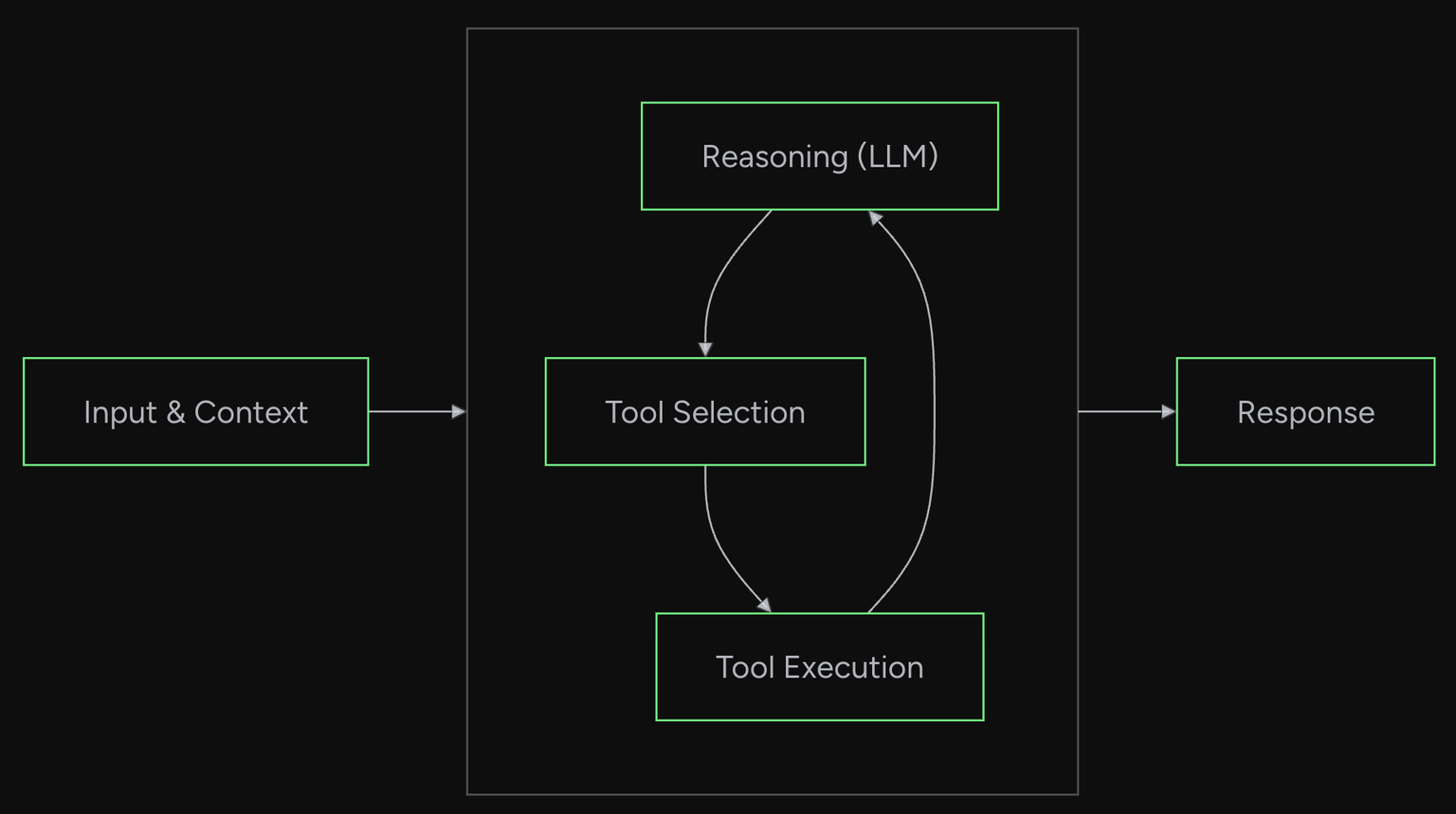
對於 Tool Execution 有分成
- Concurrent executor (Default)
- Sequential executor 其實官方文檔也沒有說得很清楚Concurrent / Sequential 到底差在哪?ex: 是否會繼承上下文?什麼情況應該用哪個的指引,所以直接上實驗結果:
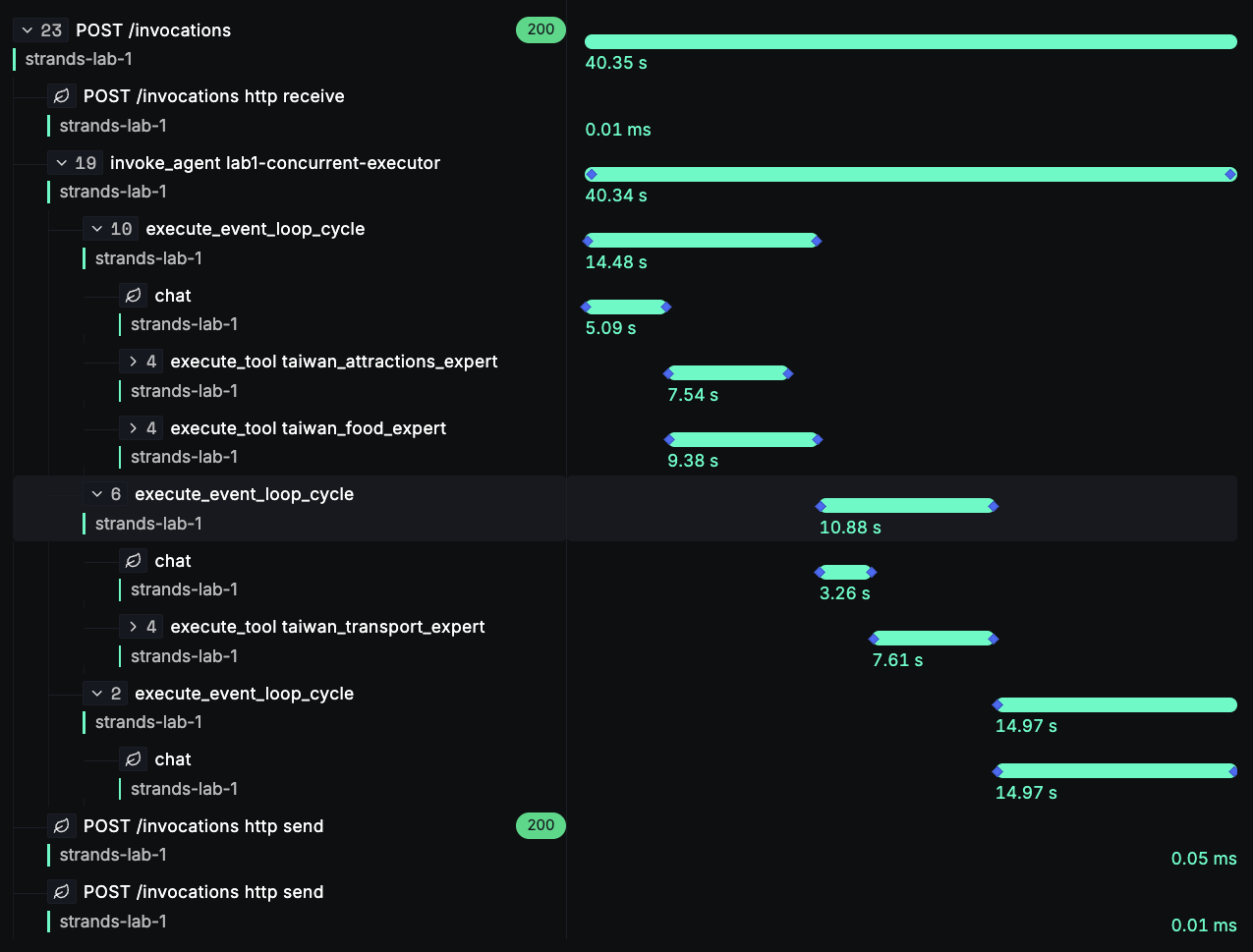
測試 1: Concurrent Executor
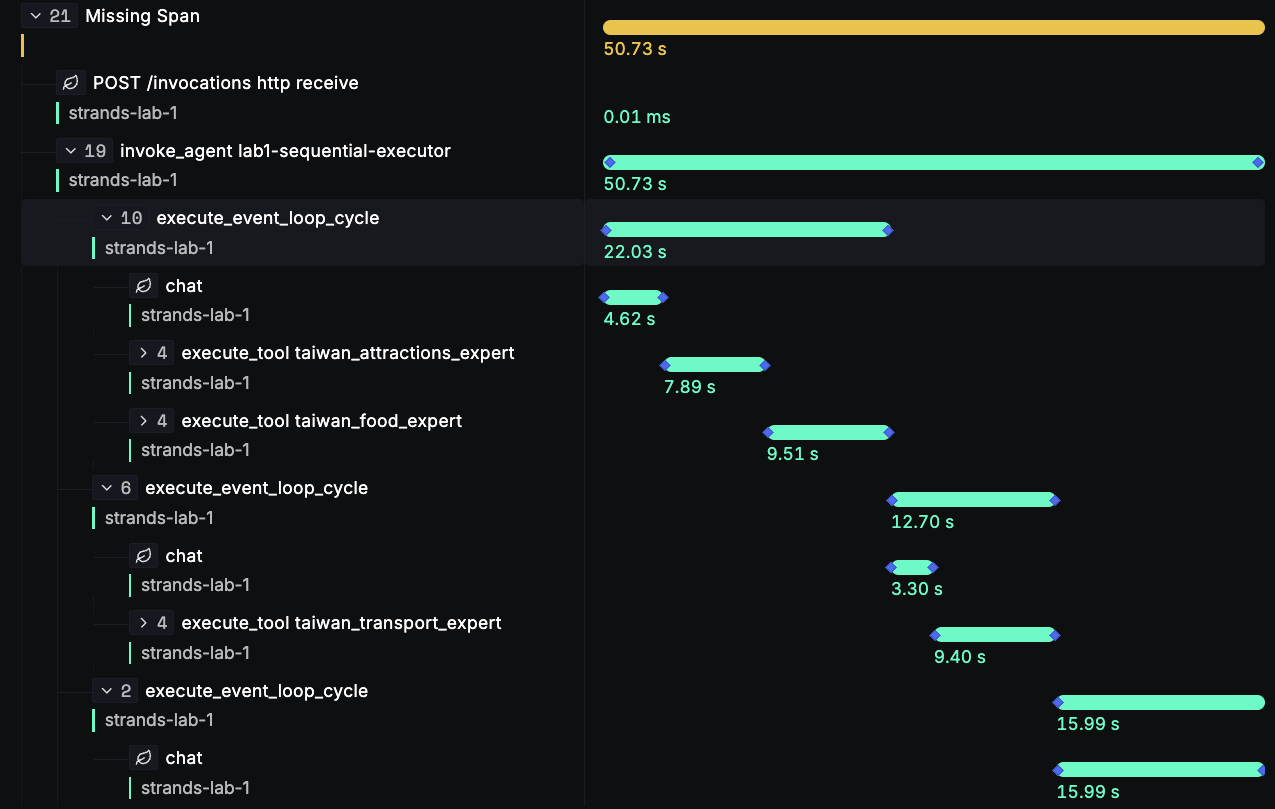
測試 2: Sequential Executor
結論
沒有經過 Agent loop Reasoning 的話,就不會重新整理上下文提供給 agent tool,是獨立事件,跟你的executor選哪個沒關係.
Lab 實作程式放在 https://github.com/GoingCloud/Alpha-Lab/tree/main/strands-agents-lab/lab-1Connect your Github account
Refs
Strands agentshttps://strandsagents.com/latest/documentation/docs/user-guide/concepts/tools/executors/?h=tool+executor